

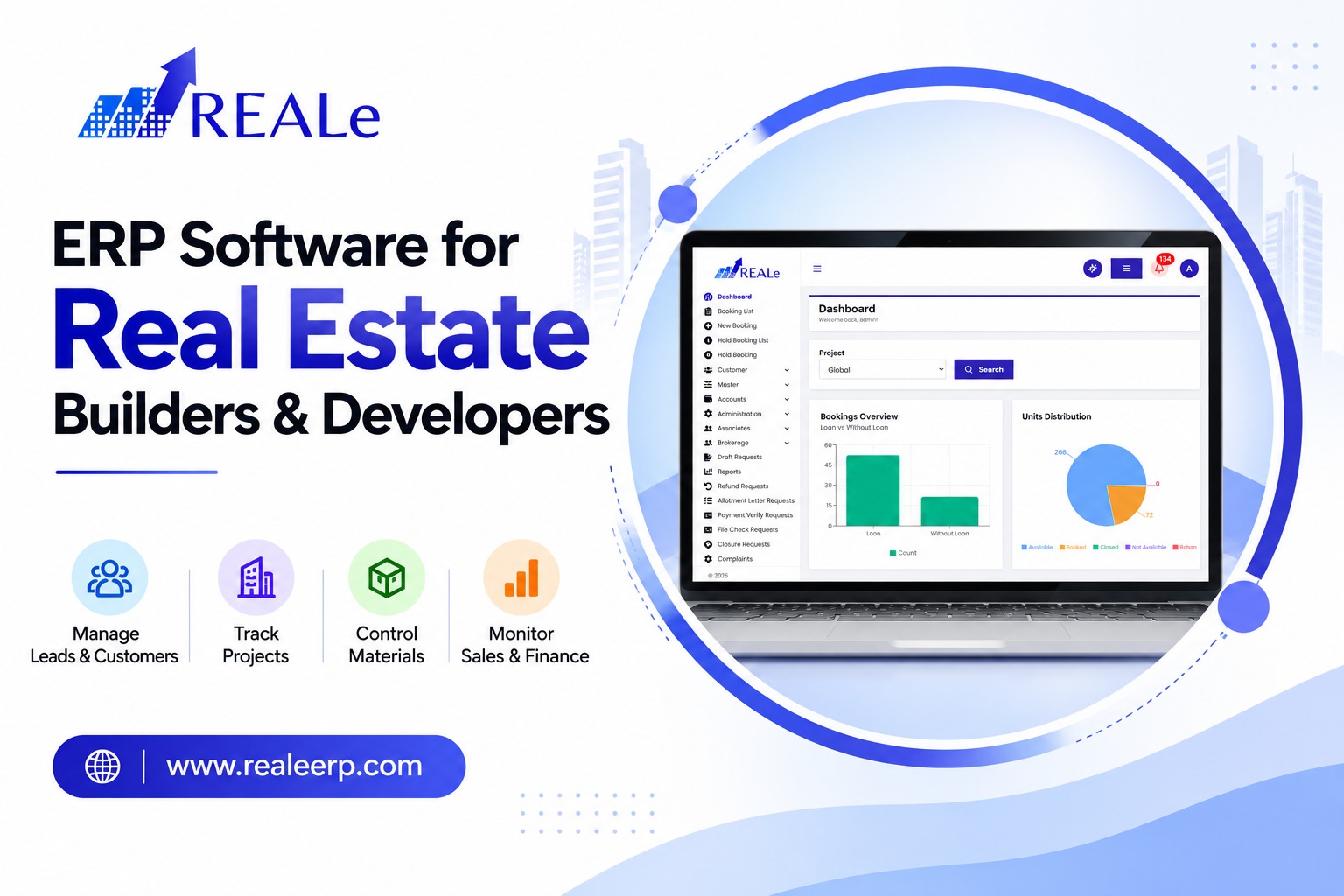
Managing a real estate business involves multiple activities, including project planning, sales, customer relationships, material procurement, finance, construction progress, and property bookings. When these operations are managed through separate spreadsheets and disconnected systems, builders and developers may face delays, data errors, and difficulties tracking business performance.
ERP software for real estate builders and developers helps bring essential business operations together on a centralized platform. It enables teams to access relevant information, coordinate activities, and make better-informed decisions.
REALe ERP is designed to support real estate builders and developers with integrated tools for managing projects, clients, bookings, materials, and other business processes. Here are ten important benefits of using real estate ERP software.
1. Centralized Business Management
Real estate businesses often manage several departments, projects, and teams simultaneously. Without a centralized system, important information can become scattered across different applications.
ERP software brings business information into one system, helping authorized users access relevant records more efficiently.
With REALe ERP, builders can explore an integrated approach to managing key real estate activities, reducing dependence on disconnected tools and improving coordination across departments.
2. Improved Project Planning and Monitoring
Managing multiple construction or township projects requires continuous monitoring of schedules, activities, resources, and progress.
Real estate ERP software can help organize project information and provide visibility into important operational activities, depending on the available features.
A centralized view helps managers identify delays, coordinate teams, and review project status more effectively. Better project visibility supports informed decisions and helps businesses keep their operations organized.
3. Efficient Lead and Customer Management
Generating leads is only the beginning of the property sales process. Builders must also manage enquiries, follow-ups, site visits, client communication, and bookings.
A real estate CRM integrated with ERP software helps organize customer information and track the sales journey.
REALe ERP's CRM capabilities include lead management, enquiry management, site visit management, follow-up management, client management, and reports and analytics.
These features help sales teams maintain organized records and reduce the risk of missing important follow-ups.
4. Better Property Booking Management
Property bookings involve tracking plot or unit availability, customer details, booking status, and related documentation.
Managing these details manually can create confusion, particularly when multiple properties and customers are involved.
ERP software can help centralize booking information and make it easier for authorized employees to review property status.
With appropriate booking management processes, builders can improve record organization, coordinate sales activities, and provide customers with clearer information.
5. Smarter Material Management
Construction projects depend on the timely availability of cement, steel, bricks, electrical supplies, and other building materials.
Poor material coordination can contribute to shortages, unnecessary purchases, wastage, and project delays.
ERP software with material management capabilities helps businesses organize procurement records, monitor material movements, and maintain better visibility into inventory.
REALe ERP includes a Material Management module designed to support the management of building materials and related processes.
Better material visibility can help project teams coordinate resources and control avoidable costs.
6. Improved Financial Visibility
Real estate developers need to monitor project expenses, customer payments, outstanding amounts, budgets, and other financial information.
When financial data is maintained across disconnected systems, preparing reports and identifying discrepancies can become time-consuming.
ERP software can help centralize financial and transaction-related information, depending on the system's capabilities.
Access to organized records helps management review business performance, monitor expenses, and make more informed financial decisions.
Businesses should ensure that financial workflows align with their accounting practices and reporting requirements.
7. Better Team Coordination
Real estate projects involve sales teams, site engineers, procurement staff, finance departments, contractors, and management.
When teams work with different versions of information, communication gaps can affect productivity and decision-making.
ERP software provides a shared platform for relevant business information, helping departments coordinate their activities more effectively.
By improving information access and reducing repetitive data entry, an integrated system can support smoother workflows across the organization.
8. More Organized Reports and Analytics
Business decisions become easier when managers can access relevant and timely information.
ERP software can provide reports on areas such as enquiries, bookings, project progress, materials, and financial activities, depending on the modules implemented.
These reports help managers identify patterns, review performance, and recognize areas that may require attention.
REALe ERP offers reporting and analytics capabilities within its CRM module, helping teams review important customer and sales information.
9. Improved Operational Efficiency
Manual processes often require repeated data entry, document searching, spreadsheet updates, and communication between departments.
These activities consume time and increase the possibility of errors.
ERP software helps streamline suitable workflows by organizing information and reducing dependence on repetitive manual tasks.
For builders and developers, improved operational efficiency can mean better coordination, more consistent records, and more time to focus on customers, project delivery, and business growth.
The actual benefits depend on software configuration, employee adoption, and the processes being digitized.
10. Supports Business Growth and Scalability
As a real estate business expands, managing additional projects, employees, customers, and materials becomes more complex.
A suitable ERP system can provide a structured foundation for handling increasing operational requirements.
Builders should evaluate whether their ERP software supports additional users, projects, locations, reporting needs, and future integrations.
REALe ERP provides a real estate-focused solution that businesses can evaluate according to their current workflows and growth plans.
Choosing software that aligns with long-term business needs can help avoid unnecessary process changes as operations expand.
How to Choose the Right ERP Software for Real Estate Builders and Developers
Before selecting an ERP solution, consider these essential factors:
- Real estate-specific features: Look for project, booking, CRM, and material management capabilities relevant to your business.
- Ease of use: Choose a system your employees can learn and adopt.
- Reporting capabilities: Check whether it provides the reports needed for operational decisions.
- Integration options: Confirm compatibility with existing accounting, communication, or business systems.
- Scalability: Consider future projects, users, and business expansion.
- Support and training: Review implementation assistance, onboarding, and ongoing technical support.
The right solution should fit your business processes rather than adding unnecessary complexity.
ERP software for real estate builders and developers helps businesses centralize operations, improve project visibility, organize customer relationships, manage materials, and support better decision-making.
By reducing disconnected workflows and improving access to information, ERP software can help builders establish more efficient business processes and prepare for future growth.
REALe ERP offers real estate-focused modules for CRM, material management, development management, and core business operations. Builders and developers can explore its capabilities to determine how they fit their operational requirements.
Visit https://realeerp.com/ to learn more about REALe ERP and explore a smarter approach to real estate business management.